Designing Your 2026: the simple process I use for end of year reflection (instead of goals)
As we approach the end of another year, you might be feeling that familiar mix of relief, exhaustion, and perhaps a determination that next year is not going to be so ‘stressful’, ‘hectic’, ‘disorganised’ ……. (insert your relevant adjective here).
I don’t know about you, but I’ve had one too many times where I’ve set lofty goals which have felt realistic after some time out but swiftly fade into the background once real life starts up again.
Besides, goals can sometimes feels restrictive - we all know life is unpredictable and throws us curve balls, leaving goals falling by the wayside.
And for those of us navigating ADHD or recovering from addictive patterns, the new year can feel particularly loaded with expectations and pressure to "get it right this time." Or some demand avoidance in the mix that ‘rebels’ against the goals.
But what if instead of another round of rigid resolutions destined to fizzle out by February, we approached 2026 differently?
What if we took time now to genuinely explore what we want our next year to look and feel like, based on our actual values and experiences rather than external and never-ending ‘shoulds’?
Cultivating Your OWN Vision of Success
Here's the thing: we're constantly bombarded with messages about what success should look like - ya know, thriving career, flash car, white picket fence/home ownership, happy kids, designer gear, six pack and 24/7 happiness in our relationships - and often we don’t step back to assess whether we even want those things in the first place.
Are they your version of success or are they your parents/family? Your culture? Your friendship group?
And, if they are yours, what are you willing to trade to get those things? Your time, energy, money, other hobbies and interests, relationships etc - because everything comes at a cost. It might be the things we don’t do, like starting those drum lessons we’ve always wanted to try or being able to attend more of the school events with our kids.
Because success is not just the outward displays of what we tend to think of as success, it is our life lived well and authentically and in alignment with our values. It’s about spending our precious time, energy and money on the things that are important to us, regardless of whether it looks like a hot mess to anyone else on the outside.
For example, you might prioritise more time with your menagerie of furry babies over more hours at work which would get you the promotion that would finally impress your Dad and gain his approval and, ultimately, both of those options are perfectly viable. But which one is actually you?
In the top 5 regrets of the dying written by Bronnie Ware, an Australian palliative care nurse who cared for patients in the last 12 weeks of their lives, the number one regret was: “I wish I'd had the courage to live a life true to myself, not the life others expected of me.”
Don’t let that be you.
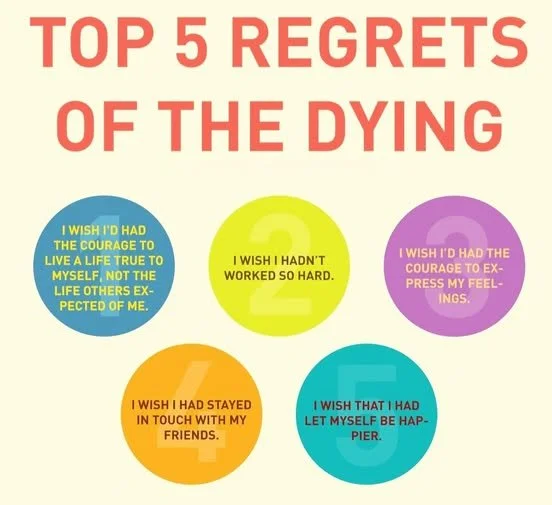
If you haven’t yet come across this book, it’s worth a read.
For many of us with ADHD, we've spent years measuring ourselves against neurotypical standards that were never designed for how our brains work. In recovery, we've often inherited someone else's definition of what a "good life" means and it’s often our opportunity to rebuild our lives in a way that is better suited to who we actually are - friendships, leisure activities, self care practices, communities etc.
This reflection practice is about reclaiming your own vision. It's about getting curious about what actually serves you, what genuinely brings you alive, and what you want to actively reduce because it’s sucking the life out of you and no one needs more of that shiz.
The Practice: More, Less, Same
I find using butchers paper and just dumping down whatever comes to mind the most helpful. The most important thing is to find yourself a quiet spot, grab whatever helps you think clearly—whether that's a notebook, a voice recorder on your phone, or a long walk—and sit with these questions:
What do I want MORE of in 2026?
This isn't about adding more tasks to an already overwhelming to-do list. Think about experiences, feelings, connections, or activities that light you up. Maybe it's more time in nature, more creative expression, more meaningful conversations, more rest, more playfulness, more structure (yes, structure can be freeing). What fills your cup?
What do I want LESS of?
What's draining you? What are you doing out of obligation rather than genuine choice? What patterns, relationships, or commitments are you ready to set boundaries around?
For ADHD brains especially, we often say yes to everything (a combo of time blindness and people pleasing) and then wonder why we're burnt out. What are your patterns? What deserves a gentle (or firm) no?
What do I want to stay the SAME?
This question often gets overlooked, but it's crucial. What's actually working in your life right now? What supports, routines, relationships, or practices are worth protecting? Sometimes in our rush to change everything, we risk throwing out what's already serving us well.
————————-
Once you’ve done this - if it’s on paper - circle the words with different colours to indicate ‘more’, ‘less’, ‘same’ so you can see the themes coming through.
If you’d like something to guide you through this I’ve pulled together a nifty template which you can download on the button below:
No email address necessary
Going Deeper: Energy Audit
If you’re struggling to find things to add to the more less same categories, you can also consider:
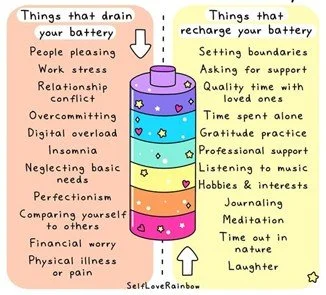
What gives me energy?
Not what you think should energise you, but what actually does. For many with ADHD, certain activities or environments genuinely recharge us even if they don't fit the typical self-care mould. Maybe it's problem-solving, building something with your hands, intense conversation, or working to music. Trust your own experience.
What drains my energy?
Again, be honest. What leaves you depleted? This might include things you've been told are "good for you" but that consistently leave you feeling flat. It can be making telephone calls, too much admin, too much or not enough alone time, needy friends, social media. It’s your call.
Understanding your energy drains isn't about avoiding all the hard things - paradoxically, hard things can also give us energy - it's about making informed choices about where you invest your limited resources.
Finding Your Word or Intention
Once you've explored these questions—and I encourage you to really sit with them rather than rushing through—look at what's emerged. Is there a theme? A pattern? A calling?
From this reflection, see if you can distill a word, phrase, or intention that captures the essence of what you want 2026 to be about. Not a rigid goal with seventeen sub-tasks, but a touchstone you can return to when you're making decisions throughout the year.
Your word might be something like:
Balance.
Boundaries.
Joy.
Presence.
Adventure.
Connection.
Courage.
Creativity.
When you’ve landed on it, put it on your fridge, your screensaver, above your desk - anywhere that will keep bringing your attention back to the word, intention or statement to anchor you back in to what you want for the year.
How I used this to make changes in my own life (imperfectly)
A few years ago while working with my own ADHD coach, she pointed out that I was doing the equivalent of two full time jobs with everything I was juggling. I listed out the apps and platforms I was using for the various things I was involved in and that alone was an astonishing revelation as it was up in the thirties.
When I did this exercise ‘more, less, same’ over that New Year period I realised I needed to take a LOT of things off my plate to reduce overwhelm and constant spinning of plates.
My word of the year was ‘simplify’ and over the course of that year I slowly worked, bit by painful bit, at winding things up, letting things go and simply stopping doing certain things. It took me longer than the year if I’m honest but it helped me keep the momentum to REDUCE rather than ADD things to my life.
I realised that I needed to clear the decks as a priority before I’d be able to get the headspace to move towards things proactively, things that I wanted.
I found having a word to keep me coming back to what I’d already decided was much more helpful than a list of goals that I’d lose momentum with a few weeks in, or that would be hidden away in a document only to be entirely forgotten until the next year.
An intention worked and felt less prescriptive because even if I was only taking baby steps at certain times throughout that year due to limited capacity, I was still doing it.
A Note on Self-Compassion
If this practice brings up grief about the past year, or anxiety about the one ahead, that's completely normal. You don't need to have it all figured out. Very few of us do, really.
This is simply about creating space to listen to yourself—perhaps the most radical act in a world that constantly tells us to look outward for answers.
————————-
As we move into 2026, may you trust your own wisdom about what you need. Your brain, your recovery, your life—they're all uniquely yours. You get to decide what success looks like.
What will your 2026 look like? And perhaps more importantly feel like to you?

I help high-performing ADHDers who are feeling stuck in patterns with alcohol, food, relationships, or work stress — especially the kind that leads to burnout and overwhelm. Together, we work toward balance, confidence, and a life that actually feels good to live.
I'm a therapist, ADHD coach, and grey area drinking coach with lived experience of both ADHD and alcohol dependence. I’ve been alcohol-free since 2017, was late-diagnosed with ADHD in 2022, and I’m a mum to neurodivergent young adults. Before this work, I spent years in executive leadership — so I understand the pressure to keep it all together while quietly unravelling inside.
I take a strengths-based, neurodiversity-affirming, and trauma-informed approach to help you make changes that stick — on your terms. I hold degrees in psychology and counselling, and I’m a member of the Australian Counselling Association (ACA) and Australian ADHD Professionals Association (AADPA).